
A coach's guide to bullying.
Most youth coaches are volunteers with a full time job, 12 children, and 90 minutes twice a week. This is not one more thing to add. Nearly all of it is decisions you are already making, made differently.
You set the culture in week one.
Whatever happens on your team in October was decided in August, usually without anyone deciding it. Who picks partners, who sits where, whether the locker room has an adult in it. Children read those choices immediately and correctly.
That is the good news. You have more power over this than any parent, any school, and any policy, because you control the room. A coach who says nothing is not neutral. The team reads silence as permission.
 Photo placeholder
Five things to set before the first game.
Pick the teams yourself
Never let captains choose. It takes 10 seconds and it publicly ranks every child in front of the others. Count off, or assign it, or draw numbers.
Be in the locker room
Not standing over anyone, just present while players change. The locker room is where most of it happens, and it happens because no adult is in there.
Assign the bus
Rotate seats each trip. It takes one minute and it removes the weekly test of who has someone to sit with.
Get in the group chat
If the team has one, an adult is in it. Say so out loud on day one, so nobody is surprised and everybody behaves accordingly.
Say the rule plainly
One sentence at the first practice. Nobody on this team gets left out, and if it happens you come to me. Then follow through the first time, because the first time is the only one they are watching.
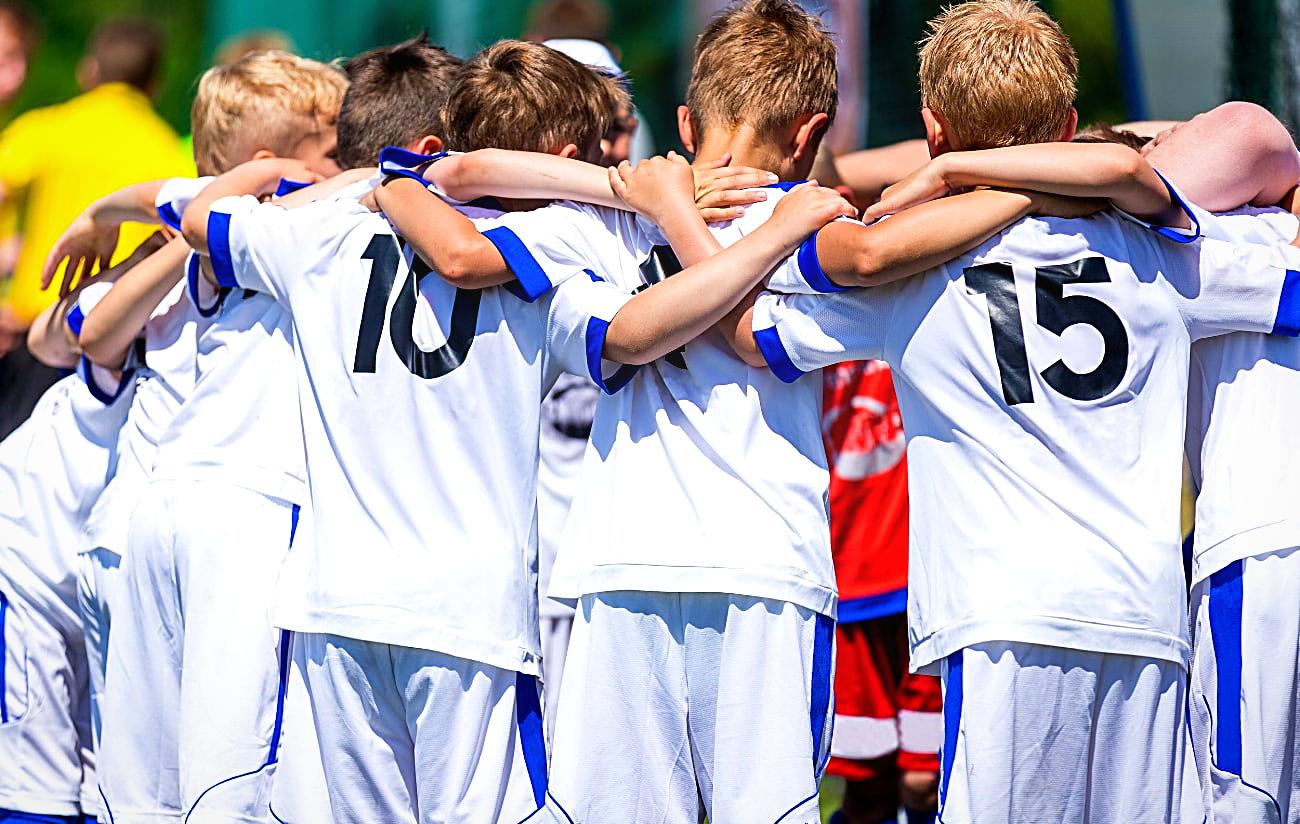 Photo placeholder
What to watch for during practice.
You will rarely see the bullying itself. What you can see is its shape, and it shows up in the same four places every time.
Who warms up alone. Who is chosen last when you are not assigning. Who nobody passes to in a drill where passing is optional. And who goes quiet the moment practice ends and the group re-forms on its own.
One of those is nothing. Three of them landing on the same child, week after week, is a pattern, and patterns are what you act on.
Handling it without making it worse.
One
Do not lecture the whole team.
A group talk about leaving people out tells 11 children exactly who complained. The child you meant to protect pays for that talk on the ride home.
Two
Talk to the player privately.
Away from the group, short, and about the behavior rather than the character. You cut Marcus out of the drill today, and that stops. Not you are a bully, which gets you a defensive 11 year old and no change.
Three
Do not stage an apology.
Forced apologies in front of the team teach performance, not repair. They also hand the targeted child one more public moment they did not ask for.
Four
Change the structure, not just the mood.
Reassign partners, rotate the bus, split the pair that feeds it. Structure holds after the conversation is forgotten, and the conversation will be forgotten.
Five
Tell both sets of parents.
Yours will hear about it anyway, and hearing it from you first is the difference between a coach handling it and a coach hiding it. Keep it factual and keep it brief.
Six
Check back in two weeks.
One question to the child who was targeted, asked privately. Is it better. That question is why they will tell you the next time, and the next time is the one that matters.
Two things you will hear, and what to say.
The first is tradition. The freshmen always carry the gear, that is just how it goes. The answer is that a tradition nobody would run in front of the parents is not a tradition, it is a habit that has never been examined. Keep the ones that build something and retire the rest.
The second comes from a parent, and it is usually some version of letting kids work it out, or toughening them up. It is worth hearing out, because the instinct behind it is not stupid. Children do need to handle hard things. The distinction is that conflict between equals is a thing children can work out, and a group against one child is not, because there is no version of that where the one child wins.
 Photo placeholder
 Photo placeholder
If you want more than a guide.
Our certification course is self paced and runs about 40 minutes. It covers the same ground in more depth, and it gives you something to point to when a parent asks what the program does about this.
Facility Training is the version for an organization rather than one coach. A representative works with your staff, and the league becomes an official No Bullies Allowed facility on completion.
And if you want the whole program on the ground where you are, local chapters is where that starts. We are bringing Community Friends to little league football and baseball first, because a team that serves together treats each other differently on Saturday.
Sources.
The structural recommendations here, assigning seats, picking teams yourself, adult presence in the locker room, come from practice and from what our program staff and partner coaches report works. They are not drawn from a controlled trial of youth sports settings, and no such body of evidence currently exists at any useful scale.
Where the claims rest on research, it is cited on the pages that carry it. See Bullying 101 for definitions and prevalence data, and the sixth grade cliff for the grade-level figures and the grade-span research.