
Bullying on youth sports teams.
A team is supposed to be the place a child belongs. When bullying happens inside one, it is harder to see and harder to leave, because walking away means giving up the sport too.
Why a team is different.
In a classroom, a child who is targeted can find another table. On a team there is nowhere else to sit. The same 15 children ride the same bus, share the same locker room, and see each other four days a week for a season.
There is also something at stake that does not exist at school. Speaking up can mean less playing time, a coach who sees you as a problem, or a group that closes ranks. Most children do the math and stay quiet, which is why so many parents hear nothing until their child asks to quit a sport they used to love.
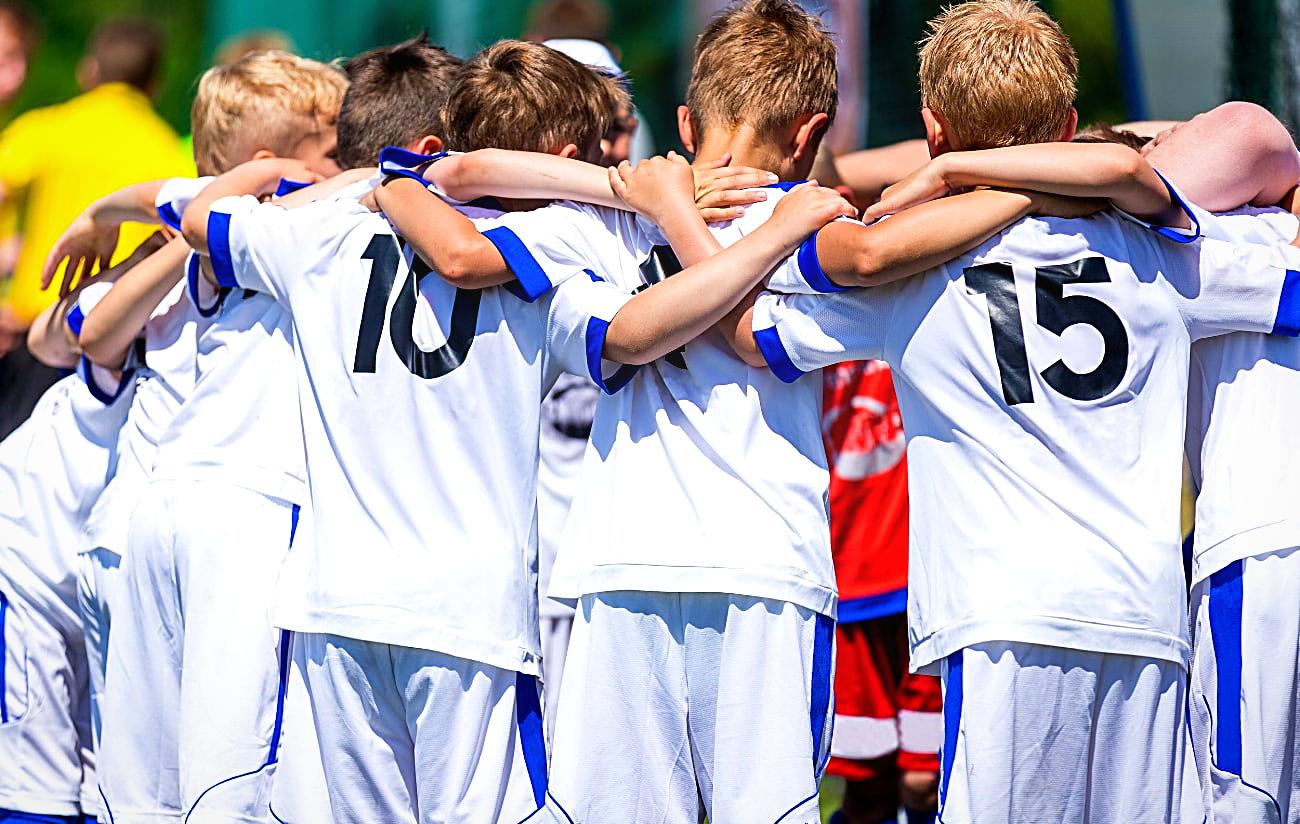 Photo placeholder
Where it actually happens.
Almost never on the field, where adults are watching.
The locker room
Unsupervised by design, and the one place children change clothes in front of each other. Comments about bodies, hidden gear, and phones where phones should not be.
The bus and the ride home
Long stretches with one adult facing forward. Who sits alone on a team bus tells you most of what you need to know about that team.
The group chat
Often created by players, sometimes by a parent, rarely watched by anyone. A child can be cut out of it or made the joke inside it without a single adult seeing.
Warmups and drills
Choosing partners, counting off, picking sides. Being chosen last over and over is a message, and it is delivered in front of everyone.
 Photo placeholder
Hazing is bullying with a better name.
Every version of it comes with a defense. It is tradition. Everyone goes through it. It builds toughness. It is how the older players welcome the younger ones.
None of that changes what it is. If a child is made to do something they do not want to do, and the group has the power to make it happen, that is bullying with a costume on. The tradition argument is worth answering plainly: something being old does not make it useful, and no championship has ever been won because a 12 year old was humiliated in a locker room.
The test is simple. Would the coach be comfortable if every parent watched it happen? If the answer is no, the tradition is the problem.
Signs specific to sports.
Wanting to quit.
Suddenly, and without a reason that holds up. A child who loved the sport in July and wants out in September is telling you something about the people, not the game.
Dread before practice.
Not before games. Games are performance nerves and they pass. Practice dread is social, and it is the more telling of the two.
Gear that disappears.
Cleats, a mouthguard, a jersey, over and over. Children rarely lose the same thing four times, and they will almost always say they misplaced it.
Going quiet on the ride home.
The car after practice is where children usually talk. When that stops, something happened in the 20 minutes before it.
What to do.
Step one
Ask about people, not the sport.
Do not ask whether they still like baseball. Ask who they warmed up with, who they sat by on the bus, and who they would call if they needed a ride. The answers arrive faster than a direct question ever will.
Step two
Go to the coach first.
Not the other parents, and not the group chat. Ask for five minutes after practice rather than raising it on the sideline in front of players. A coach who does not know is not the same as a coach who does not care, and most of them do not know.
Step three
Ask for something specific.
Not more supervision generally. Ask the coach to be in the locker room during changes, to assign bus seats, or to pick teams himself instead of letting captains choose. Specific requests get done. General ones get agreed with and forgotten.
Step four
Get into the group chat.
If your child is in one, so are you, or another parent you trust is. That is not surveillance at this age, it is supervision, and it is the room where most of it happens.
Step five
Escalate to the league.
If the coach will not act, most leagues have a board and a code of conduct. Ask for the code in writing. Volunteer organizations move quickly once a written policy is in the conversation.
Step six
Do not let the sport be the cost.
If a team cannot be fixed, move your child to another one rather than out of the sport. A child who quits after being pushed out learns that the people who made it miserable won, and that lesson lasts longer than the season did.
What to ask before a season starts.
The easiest time to prevent this is before anyone has signed up. Four questions tell you almost everything about how a program is run.
Who is in the locker room while players change. What happens when a player is left out on purpose. Is there a team group chat, and which adult is in it. And has anyone on the coaching staff had training in bullying prevention.
A well run program answers all four without hesitating. A program that has never considered them will tell you that too, in how long it takes to respond.
 Photo placeholder
 Photo placeholder
Why we work through sports anyway.
None of this is an argument against youth sports. A team is still one of the few places a child can be needed by other people every week, and that is exactly what bullying takes away.
That is why Team Tenacity exists. It is a camp for children ages six to 14 who feel behind, or who have been discouraged from trying a sport at all. Everyone arrives new, so nobody is already on the outside of anything, and the confidence is built through doing rather than through being told.
Community Friends works the other side of it. Children earn badges through community service, and we are bringing it to little league football and baseball first, because a team that serves together treats each other differently on Saturday.
Sources.
This page is written from practice rather than from a single dataset, and it is worth saying which is which. The warning signs and the steps for parents come from what coaches, parents, and our own program staff report, not from a controlled study. Where research does exist, it is thinner here than in school settings: bullying inside youth sports teams is markedly under-studied compared with bullying in schools, which is part of why this page exists.
For the underlying definitions and the data on bullying generally, see Bullying 101, which carries its sources.