
The sixth grade cliff.
Sixth grade has the highest bullying rate of any grade in American schools. The research suggests that is not mainly about being 11. It is about the building they walked into.
What the numbers show.
In the 2021 to 2022 School Crime Supplement, 27 percent of 6th graders reported being bullied at school. Seventh grade was 26 percent and eighth was 25 percent. Then it drops: 18 percent in 9th, 16 percent in 10th, 10 percent in 11th, and 15 percent in 12th.1
The pattern holds when you ask schools instead of students. About 28 percent of middle schools report bullying happening at least weekly, against 15 percent of high schools and 10 percent of elementary schools.2
So the worst year of a child's school life for this, statistically, is the first year of middle school.
 Photo placeholder
 Photo placeholder
It is the building, not the birthday.
The obvious explanation is that 11 and 12 year olds are difficult. The research says otherwise, and the cleanest evidence comes from comparing children of the same age in different school structures.
A New York City study published in the American Educational Research Journal controlled for student background, class size, and school type, then compared 6th graders across grade configurations. Sixth graders in K through 8 and 6 through 12 schools were less likely to report bullying, fighting, and gang activity, and more likely to say they felt safe and welcome, than 6th graders in standalone 6 through 8 middle schools.3
The researcher's summary of it is the sentence worth remembering. If it were simply miserable to be 12 and better to be 15, that would not be about the school. It matters where you stand in the grade span.3
Four things change at once.
Consolidation is the event. These are the consequences.
The deck gets reshuffled
Several elementary schools feed one middle school. Every social position a child spent five years earning is gone, and the hierarchy rebuilds from scratch in about six weeks.
Top to bottom
A fifth grader was the oldest in the building. A sixth grader is the youngest, alongside children two years further into adolescence.
No adult knows them
One teacher who saw a child all day becomes six or seven who each see them for one period. Research on the transition points to more impersonal classes, multiple subject teachers, and increased social comparison as contributing factors.4
It gets more targeted
Victimization in middle school appears more concentrated than in elementary: more children doing the bullying, aimed at fewer children.4
Where the research disagrees, and why that matters.
This is worth stating plainly rather than presenting one tidy story. Not every study finds the same thing.
Some research finds that students who transitioned reported lower self-esteem and higher rates of being bullied than peers who stayed in the same school.5 Other work, including a natural experiment where half of 698 students moved to middle school and half remained, found peer victimization actually decreasing over the transition period while bullying perpetration stayed stable.6 Research comparing academic outcomes across K through 8 and standalone middle schools is truly inconclusive.7
What that means for a parent is useful rather than discouraging. Sixth grade is a high risk year on average, and it is not a sentence. Plenty of children come through it having made the best friendships of their lives. The variable that keeps appearing is not the child's age, it is what the school does about climate.
 Photo placeholder
What to do the summer before.
One
Get them a group first.
A team, a class, a club, anything that gives them a set of people before day one. Children who walk in already belonging to something are much harder to isolate, and the reshuffle is exactly when isolation happens.
Two
Walk the building.
Most schools allow it before term. Knowing where the bathroom, the lunchroom, and their locker are removes the visible lost look that first weeks reward.
Three
Name what is coming.
Tell them the hierarchy resets and that the first month is noisy for everyone. A child who expects it reads it as normal rather than as evidence that something is wrong with them.
Four
Find the one adult.
No teacher now sees your child all day, so nobody is tracking them. Identify a counselor, coach, or homeroom teacher and make contact early, before there is a problem to report.
Five
Ask about the phone.
Group chats form in the first weeks and exclusion happens there before it happens in a hallway. Decide your rules before the phone is already in the middle of it.
Six
Watch the first six weeks.
That is when positions settle. A child who is quiet and unwilling to talk about lunch in week five is telling you where they landed.
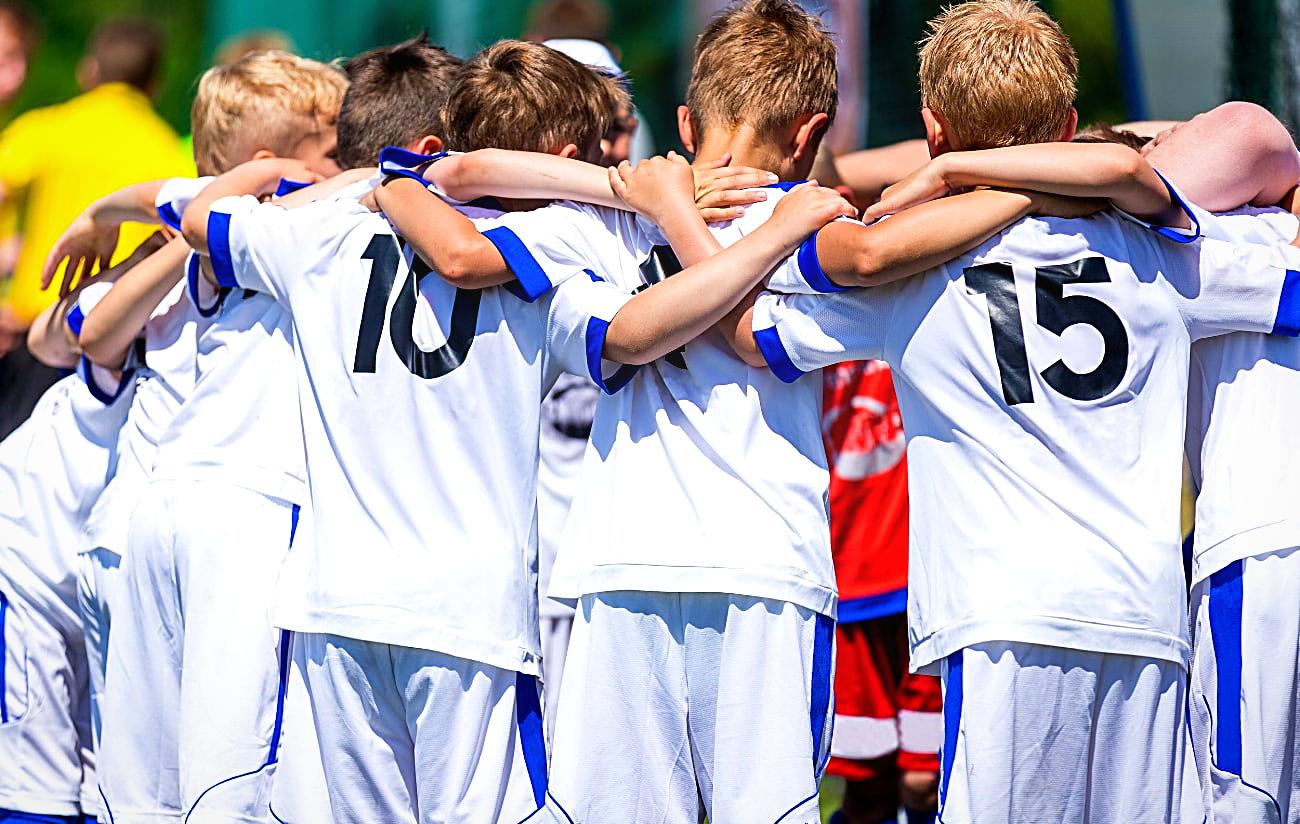 Photo placeholder
Why a team is the strongest move.
Of everything above, the first one carries the most weight. The reshuffle punishes children who arrive unattached, and a standing obligation to other people is the fastest antidote to that.
Team Tenacity is built for exactly this child: six to 14, feels behind, has been discouraged from trying a sport, or has never tried one because they were sure they would be worst. Everyone arrives new, so nobody starts on the outside.
If sport is not the route, Community Friends builds the same thing through service. And if your child is already in a team, bullying inside teams is its own subject worth reading.
Sources.
1. National Center for Education Statistics, School Crime Supplement to the National Crime Victimization Survey, 2021 to 2022, grade-level breakdown of students reporting being bullied at school.
2. Centers for Disease Control and Prevention, school-level reporting on frequency of bullying by school type.
3. Schwartz, A.E., et al., American Educational Research Journal, New York City study of grade span and school climate, comparing 6th graders across K to 8, 6 to 12, and 6 to 8 configurations.
4. Research on the elementary to middle school transition identifying more impersonal classes, multiple subject teachers, social comparison, and more concentrated victimization patterns in middle school settings.
5. Weiss and Kipnes, 2006, on self-esteem and victimization among students who transitioned compared with those who remained.
6. Natural experiment involving 698 students, half transitioning from Grade 5 to Grade 6 and half remaining, examining changes in peer victimization and bullying perpetration.
7. Comparative research on K to 8 versus separate middle school configurations, including New York University analysis of New York City schools, which reports mixed and configuration-dependent academic results.